(English follows)
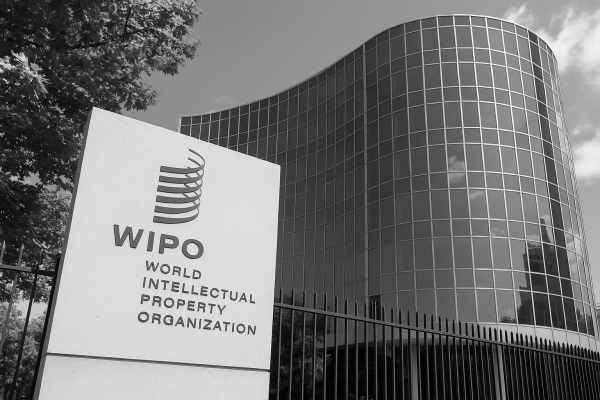
Les invasions barbares numériques prennent leur véritable envol avec l’accélération incontrôlée du moissonnage du Web par les robots d’entraînement de l’IA. J’en faisais mention dans l’article sur la journée « Communs de données et intelligence artificielle : regards croisés France–Québec », notamment avec l’annonce de la création de l’Agentic AI Foundation (AAIF). Je viens, par ailleurs, de me joindre au nouvellement créé groupe d’experts techniques sur l’intelligence artificielle de l’OMPI – la Artificial Intelligence Infrastructure Interchange (AIII) – qui pourrait constituer une espace de dialogue et où sera discuté l’émergence d’instances de normalisation des pratiques éthiques liées à l’exploitation de la propriété intellectuelle exposée sur les réseaux. Il est possible de consulter la liste des participant·es sur le site officiel de l’initiative. Or le groupe, qui se réunit virtuellement sur Confluence, est constitué de 109 organisations et individus parties prenantes et aborde 12 chantiers. Il est clair qu’en l’absence d’une animation serrée et éclairée, l’initiative pourrait rapidement s’enliser. À ce jour, l’existence d’une gouvernance collaborative rigoureuse au sein du projet AIII n’est pas encore démontrée.
Si nous revenons du côté de l’AAIF, la structure démocratique semble tout autant faire défaut. Elle ne permet pas à des membres associés à but non-lucratif ou gouvernementaux de disposer d’un droit de vote ou de sièges au conseil d’administration. Lorsqu’on connaît les soucis liés au pillage des serveurs des communs numériques ou de sites comme l’Internet Archive, on demeure donc en droit d’être sceptique quant aux intentions de favoriser l’intérêt général de cette industrie. L’AAIF est pourtant soutenue par la LINUX Foundation qui promeut le code libre. Est-ce là signe de contradiction ou de cohérence entre notions d’Open Source et de Free Riding des communs ? La liberté d’entreprendre appliquée à l’IA pose avec sérieux la question des problèmes liés aux philosophies accélérationnistes. Rappelons que liberté et gratuité ne signifient pas la même chose, même si le terme FREE désigne les deux : « Think free as in free speech, not free beer. » – Richard Stallman.
Quant à elle, la Decentralized Identity Foundation se pose comme nouvel acteur de confiance pour la protection, la validation des identités et utilise le code de propriété intellectuelle de la W3C tout en faisant partie de la galaxie ConsenSys, entreprise technologique privée du secteur de la blockchain. En quoi DIF se qualifie-t-elle en regard d’autres initiatives de gestion d’identité souveraine comme le projet SOLID de Tim Berners-Lee ?
Autant dire que bientôt, si ce n’est déjà le cas, le numérique nous demandera de lui manifester une confiance aveugle, car il devient désormais quasi-impossible de maintenir un niveau de littératie numérique adéquat.
(Les références suivent la version anglaise)
WIPO Technical Expert Group on Artificial Intelligence, Model Context Protocol Standard (MCP) and the Decentralized Identity Foundation (DIF)
Digital barbarian invasions are truly taking off with the uncontrolled acceleration of web harvesting by AI training bots. I mentioned this in the article about the conference « Data commons and artificial intelligence: a comparative perspective from France and Quebec », particularly with the announcement of the creation of the Agentic AI Foundation (AAIF). Furthermore, I have recently joined the newly created WIPO Artificial Intelligence Infrastructure Interchange (AIII) technical expert network (TEN) which could serve as a forum for dialogue and where the emergence of bodies to standardize ethical practices related to the exploitation of intellectual property exposed on networks will be discussed. Further information is available and the list of participants is on the official website. However, the group, which meets virtually on Confluence, comprises 109 organizations and individual stakeholders and is working on 12 projects. It is clear that without close and informed leadership, the initiative could quickly stall. To date, the existence of rigorous collaborative governance within the AIII project has not yet been demonstrated.
If we return to the AAIF, the democratic structure seems equally lacking. It does not allow non-profit or governmental associate members to have voting rights or seats on the board of directors. Given the concerns related to the plundering of servers belonging to digital commons or sites like the Internet Archive. Therefore, one remains entitled to be skeptical about the intentions of this industry to promote the general interest. The AAIF is, however, supported by the LINUX Foundation, which promotes free code. Is this a sign of contradiction or consistency between notions of Open Source and Free Riding the commons ? The freedom to undertake business as applied to AI seriously raises the question of problems linked to accelerationist philosophies. It’s important to remember that freedom and free access do not mean the same thing, even if the term FREE refers to both:« Think free as in free speech, not free beer. » said Richard Stallman.
The Decentralized Identity Foundation (DIF) positions itself as a new trusted player in identity protection and validation, utilizing the W3C’s intellectual property code while being part of the ConsenSys group, a privately held blockchain technology company. How does DIF compare to other sovereign identity management initiatives like Tim Berners-Lee’s SOLID project ?
It goes without saying that soon, if it isn’t already the case, digital technology will require us to place blind trust in it, because it is now becoming almost impossible to maintain an adequate level of digital literacy.
References
https://www.linuxfoundation.org/about
https://modelcontextprotocol.io/docs/getting-started/intro
https://identity.foundation/governance/about
No responses yet