(English follows)
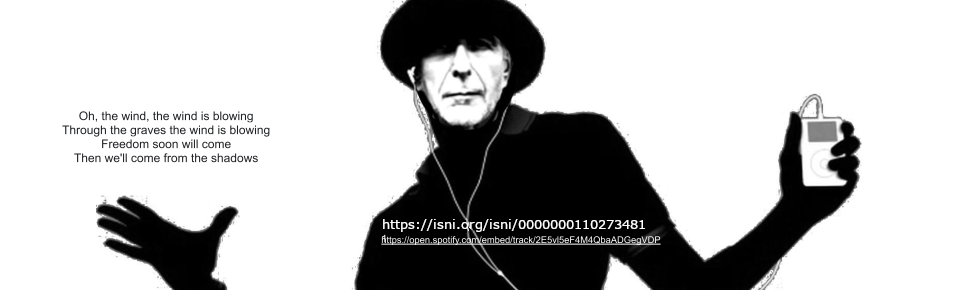
Comment désormais s’assurer que l’International Standard Name Identifier est bien attribué à des créateurs humains et non à des artistes virtuels ? Est-ce qu’un artiste virtuel peut-être considéré comme un personnage de fiction au sens entendu par l’ISNI ? Si oui, comment l’ISNI affiche-t-il ce statut en ligne ou s’assure-t-il d’une juste attribution des statuts de personne physique, de personne morale ou de personnage fictif ? L’ISNI peut-il jouer un rôle de validateur ou le standard est-il bientôt moribond ?
Ouvrons-nous la porte à des vérifications biométriques pour les artistes humains ? Ce serait certes une façon de s’assurer qu’un créateur est bel et bien humain et pourra faire valoir les droits conférés à ce statut. Mais n’est-ce pas jouer avec le feu que requérir les empreintes digitales ou de l’iris à tous les artistes ? Lorsque ces empreintes biométriques sont détachées de leur enveloppe corporelle qui peut prédire où et comment elles finiront par être détournées ?
Mickey Mouse est un personnage fictif et est identifié comme tel (Fictitious Character) https://isni.org/isn/0000_0000_5319_3214/, mais pas Donald Duck qui est présenté comme un interprète (Performer) https://isni.org/isn/0000_0000_5319_3214/.
Naevis est une idole virtuelle (et un être humain de fiction) dans Wikidata https://www.wikidata.org/wiki/Q131456865, Musicbrainz la présente comme (virtual artist under SM Entertainment) https://musicbrainz.org/artist/278d7420-2413-4fa5-ae63-5ad67412a470, mais elle est actuellement absente de ISNI Search.
Hatsune Miku est reconnue comme Personnage et “Character” propriété du logiciel Vocaloid dans Musicbrainz : https://musicbrainz.org/artist/130d679a-9a92-4373-8348-0800b6b93a30, mais ISNI ne signale pas sa nature fictive en le présentant comme performer et singer https://isni.org/isni/0000000402196107
Ça y est la boîte est ouverte…
ISNI : Identifying human and virtual artists, biopolitics and the gigantic Pandora’s box
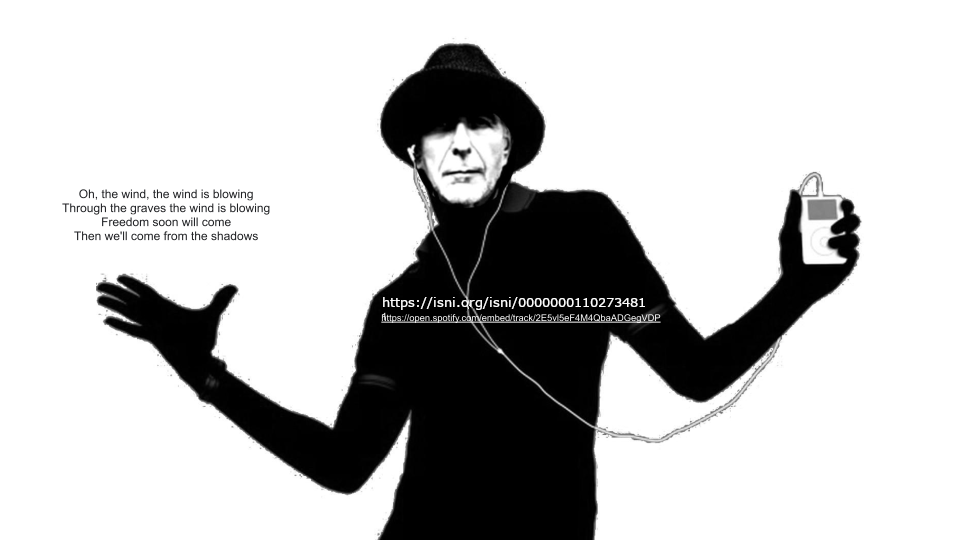
How can we now ensure that the International Standard Name Identifier is truly attributed to human creators and not virtual artists ? Can a virtual artist be considered a fictional character as defined by ISNI ? If so, how does ISNI display this status online or ensure the correct attribution to a natural person, a legal entity, or a fictional character ? Can ISNI act as a validator, or is the standard on its way out ?
Are we opening the door to biometric verification for human artists ? It would certainly be a way to ensure that a creator is indeed human and can assert the rights conferred by that status. But isn’t it playing with fire to require fingerprints or iris scans from all artists ? Once these biometric data are detached from their physical form, who can predict where and how they will ultimately be misused ?
Mickey Mouse is a fictional character and is identified as such (Fictitious Character) https://isni.org/isn/0000_0000_5319_3214/, but not Donald Duck, who is presented as a performer https://isni.org/isn/0000_0000_5319_3214/.
Naevis is a virtual idol (and a fictional human being) in Wikidata https://www.wikidata.org/wiki/Q131456865, Musicbrainz presents it as a virtual artist under SM Entertainment : https://musicbrainz.org/artist/278d7420-2413-4fa5-ae63-5ad67412a470, but it is currently absent from ISNI Search.
Hatsune Miku is recognized as a Character property of the Vocaloid software in Musicbrainz : https://musicbrainz.org/artist/130d679a-9a92-4373-8348-0800b6b93a30, but ISNI does not signal its fictitious nature by presenting it as a performer and a singer https://isni.org/isni/0000000402196107
The box is open…
No responses yet